by Jerry Philips | May 23, 2019 | Cryogenic environments, Displacement Sensor, Fiber Optic Vacuum Passthru, Fiberoptic Sensors, multiplexing sensors, Non-Contact Sensing, Quality Control, space cryogenics, Space Telescope Lens
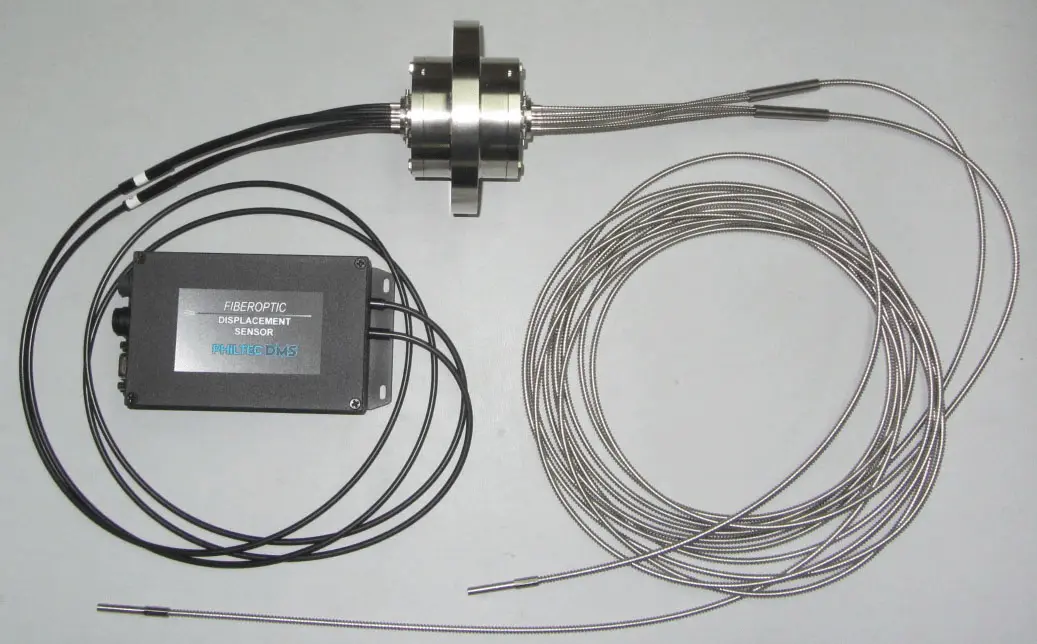
The Euclid Satellite project a good example of Philtec’s sensors being used with excellent results in cryogenic conditions. A technical paper published in 2012 shows Philtec’s high precision sensors were successfully used at 150°K to verify the distortion of...
by Jerry Philips | Feb 23, 2018 | Auto Glass Shape Gaging, Fiberoptic Sensors, Non-Contact Sensing, Quality Control, turnkey solution
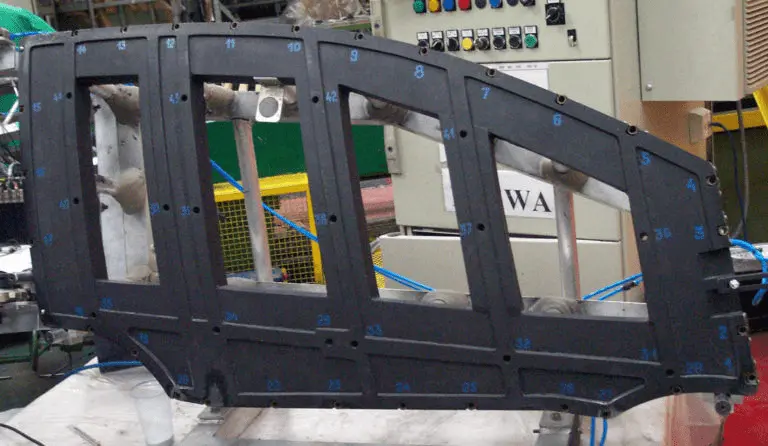
Philtec has partnered with the Italian company Technosens to provide the complete turnkey solution for automatic production lines. The method used is to compare a production piece glass shape to the shape of a master frame as shown here. The production line glass is...
by Jerry Philips | Mar 15, 2017 | Auto Glass Shape Gaging, Fiberoptic Sensors, multiplexing sensors, Non-Contact Sensing, Quality Control
The shape of curved glass windows in automated production lines is typically measured using LVDT contact sensors. When the glass is very thin and light, normal pressure of the LVDT probes tend to move the glass from the holding fixture and corrupt the measurement....
by Jerry Philips | Sep 24, 2015 | Fiberoptic Sensors, Non-Contact Sensing, Quality Control, turbine blade tip clearance, Wireless Sensors
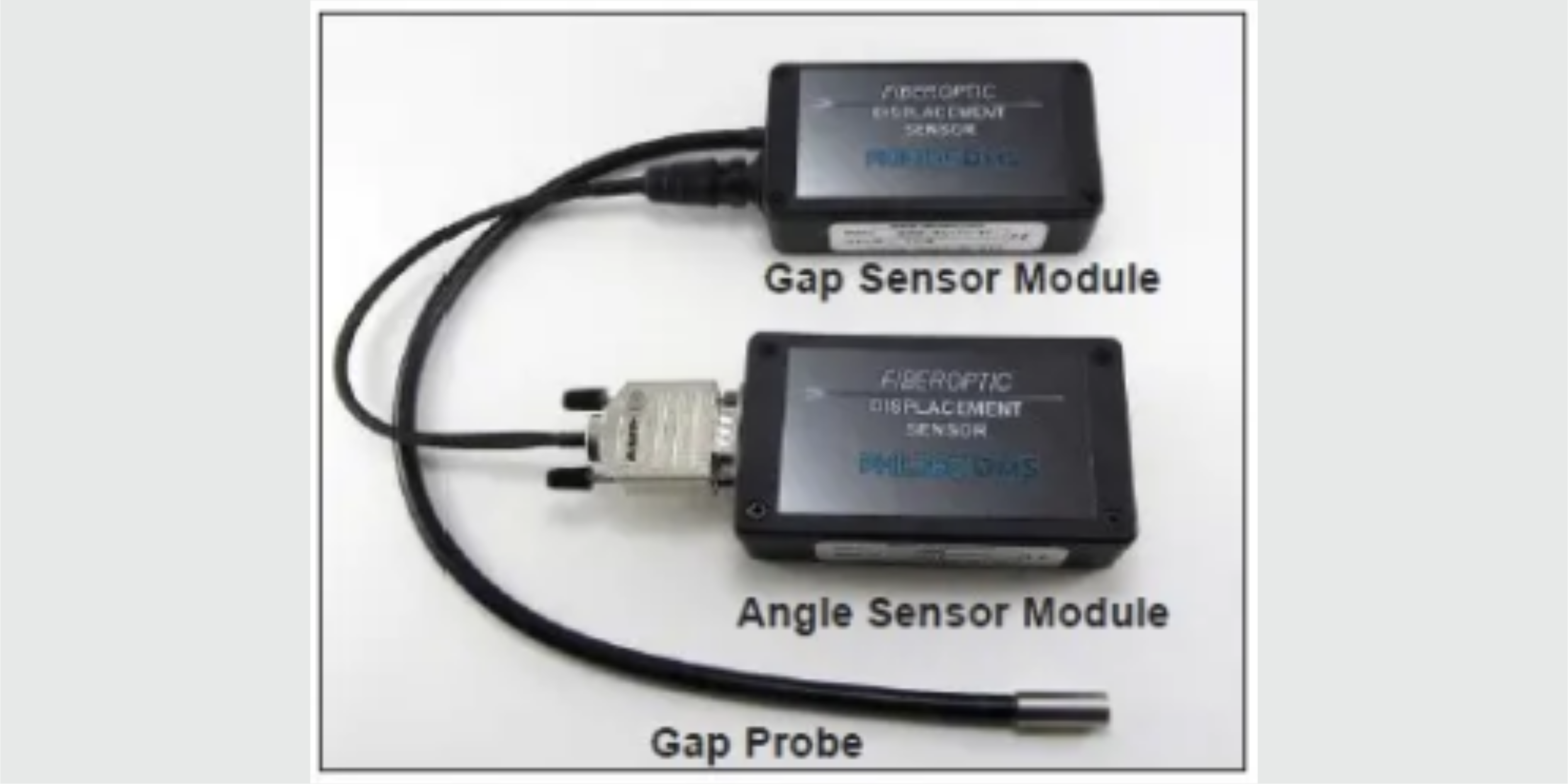
Gas and steam turbine manufacturers of fossil power plants have long used hand-held feeler gages to measure turbine blade tip clearances and inspect the roundness of the TBC linings at access ports provided for that purpose. With new construction and at overhaul,...
by Jerry Philips | Dec 17, 2013 | Non-Contact Sensing, Quality Control, Thread Inspection
The Problem: Inspection of the integrity of small internal threads such as M10. The Solution: Very small fiberoptic probes can be made having two diametrically opposed sensors. The probe can be used to scan the length of internally threaded holes as the probe is...